IN CONVERSATION WITH HUGO FALAISE
IN CONVERSATION WITH HUGO FALAISE
About Hugo Falaise
Hugo Falaise is a French designer and textile-embroidery artist born in Brittany in 1996 and based in Paris. He blends textile craftsmanship with object and furniture design, using hand-embroidery to sculpt fabrics and redefine how materials and ornamentation can function in contemporary design. His work often plays with texture, form, and sensory experience, creating unique handcrafted pieces that sit between craft, art, and design. At Paris Design Week, Hugo’s work has been showcased in exhibitions that highlight his embroidered furniture and objects, where he questions traditional material relations and contemporary ornamentation in design.
What is the single most important idea your showcased piece is solving
for the future of design?
Hugo :
What I consider most important in my work—and what I hope to contribute to the future of design
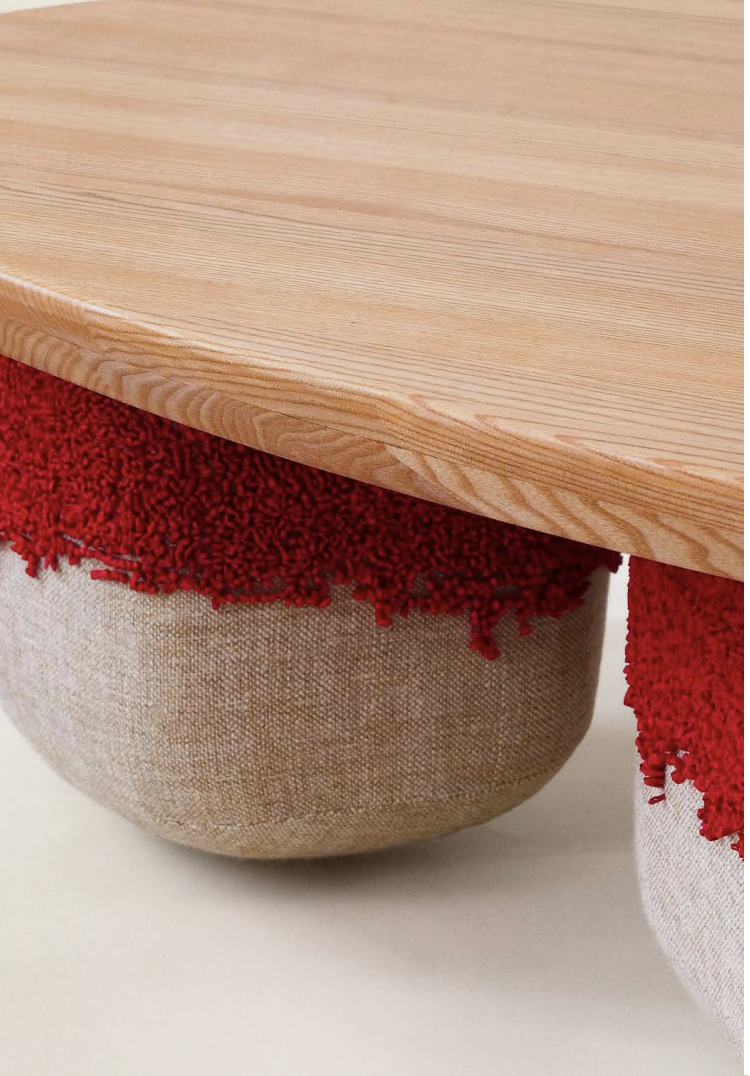
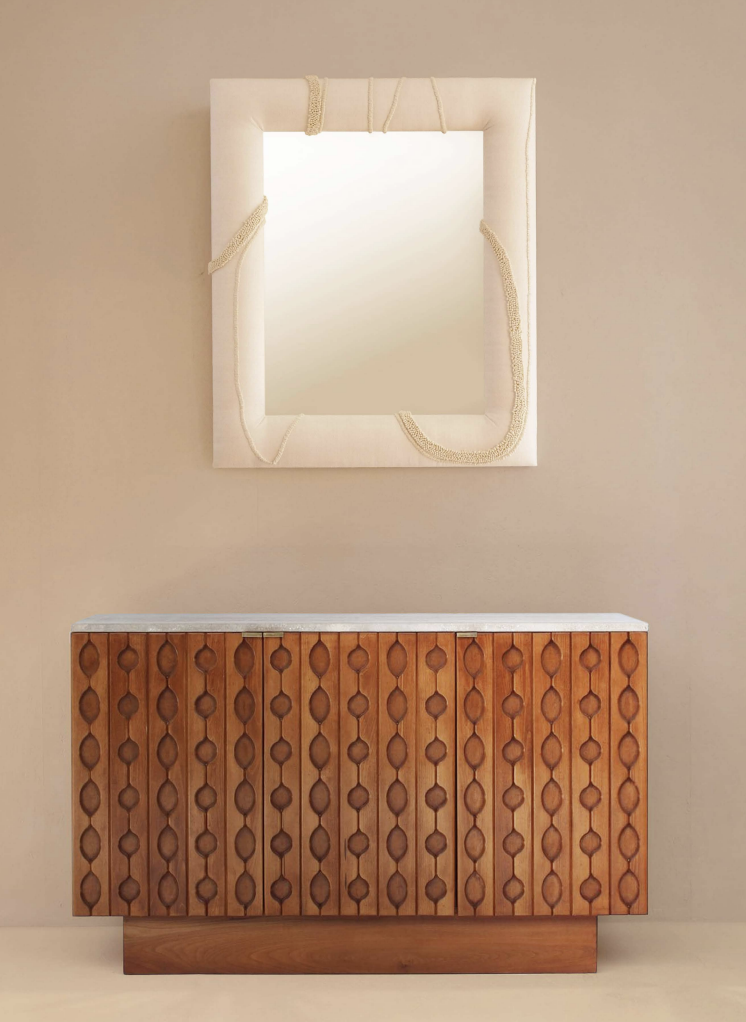
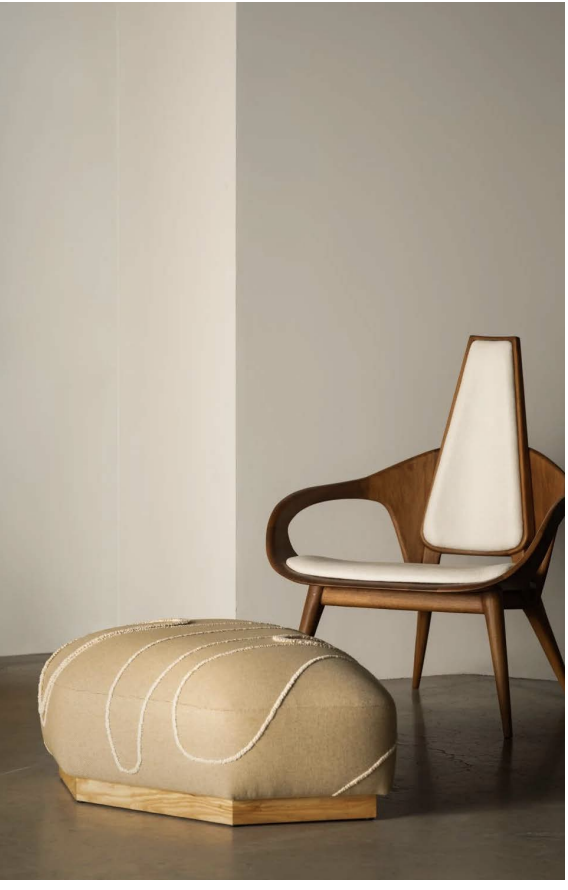
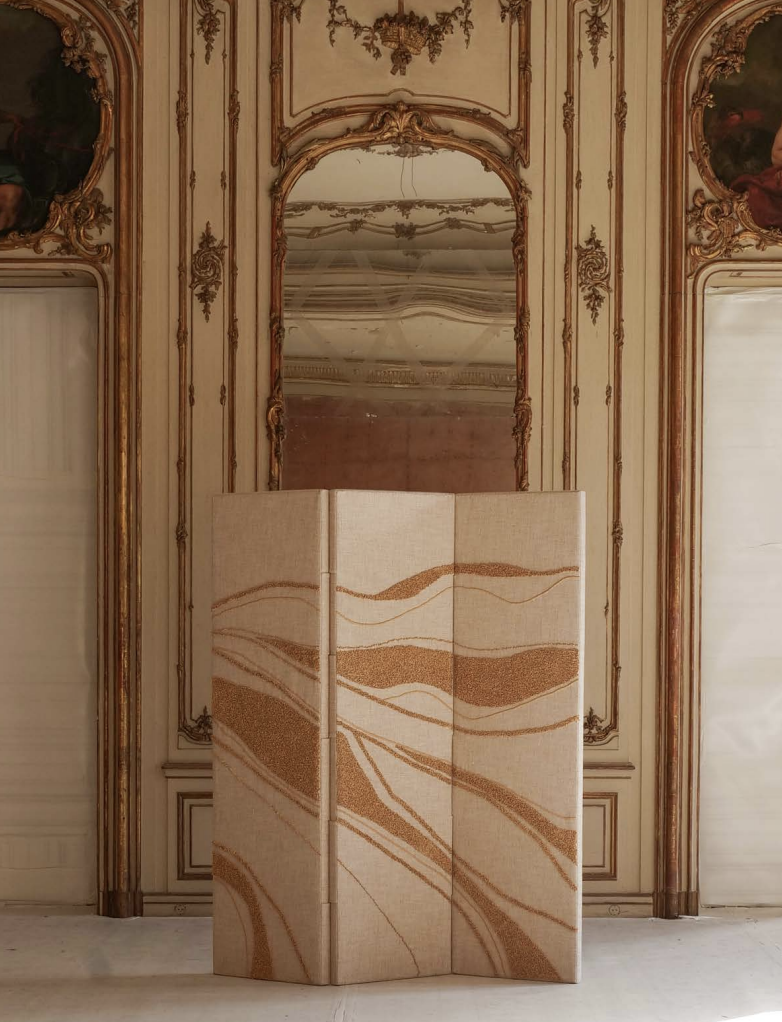
is the use of embroidery as a way to create textured surfaces for furniture and interiors. Through
this process, I explore how embroidered volumes interact with light and shadow.
2. How do you keep your design human and distinct in the age of flawless AI
creation?
Hugo :
It is precisely because my work is imperfect that it becomes interesting. You can see the movement
of the hand, you can feel the organic gesture within the lines. The more imperfect the embroidery is,
the more it plays with light and shadow — and that is exactly what I am looking for.
3. What is your most innovative regenerative material, and what ethical
choice does it force us to make?
Hugo :
I work mainly with natural materials such as cotton, leather, raffia, and linen. My intention is to
transform these raw materials through craftsmanship, revealing them as refined and luxurious
textures.
4. How does your physical design help people disconnect or slow down in
our digital world?
Hugo :
My creative process is itself an ode to returning to ancestral craftsmanship—an exploration of how
traditional embroidery techniques can find their place in our fast-paced society. My work is about
taking time, focusing on detail, and creating a decor point by point.
How did you break into the furniture industry or design field?
Hugo :
My arrival in the furniture field as a designer was a gradual journey. I began with studies in
architecture, then moved toward smaller scales by working in fashion scenography. Later, I joined a
glassblowing artist’s studio, where I discovered the broader world of craftsmanship, design, and art.
On my own path, I started designing embroidered pieces six years ago — at the same time I created
my brand — but I officially launched my studio in 2024. Since then, I’ve dedicated myself fully to
my creations, presenting my first furniture collection during Paris Design Week in September 2024.
Describe your practice in more detail. What inspired you to create your
current concept or studio branding?
Hugo :
I focus on embroidery craftsmanship and on how it can be integrated at an architectural scale. My
studio is driven by the will to research and develop new ways of approaching embroidery —
exploring volume, relief, and texture to create a true décor, like a patina on a piece of furniture or a
scenographic gesture in a theatre.
Who would be your icons and muses?
Hugo :
My work is strongly informed by deconstructivist art — the rhythm, fragmentation, and visual
dynamism of Fernand Léger’s paintings resonate deeply with my own approach to form and
composition.
Tell me more about designers or artists in general you would love to
collaborate with.
Hugo :
I would love to collaborate with master interior designers such as Laura Gonzalez or Pierre
Yovanovitch, whose colorful and bold universes resonate deeply with me. Their unconventional
lines and distinctive visions would offer a fascinating interpretation of my work.
When designing a furniture piece, what is the most important factor for
you?
Hugo :
The most important thing for me is to make the work different — to push a technique or a material
into a territory where we are not used to seeing it.
How do you translate a heavy, natural object, like a rock or pebble into a
soft material like thread or fabric?
Hugo :
I approach upholstery work in a sculptural way — with soft materials like fabric, you can push the
form in so many directions, as an organic pebble. I also like to use raw materials in my embroidery
so they can create visual illusions: for example, with raffia, you might imagine the texture of carved
wood.
In a fast-paced market, how does the visible, manual work in your
designs increase their value for collectors compared to mass-produced
items?
Hugo :
I believe the uniqueness of a piece is what makes it truly magical. And when something is made by
hand, it is, by nature, inevitably unique.
Do you want people to see your embroidered pieces as art first (that
happens to be functional) or as a functional object first (elevated by art)?
Hugo :
I’m deeply interested in how art can become functional — how a piece can exist as a functional
object elevated by artistic expression.
What is a simple, everyday object that you think is already so perfectly
designed that you wouldn't try to change it?
Hugo :
I believe every object — even the simplest everyday one — can be rethought and reimagined.
Everything is always in motion, so there is always a need to adapt.
Having established your own workshop, what is your hope for the role of
the contemporary artisan, specifically those focused on textile and craft,
in the broader global design market over the next decade?
Hugo :
Over the past few years, the design industry has shown a growing interest in fabric, embroidery,
tapestry, and other textile arts. This shift reflects a desire to create unique interior décors in which
artisans have an increasingly important role to play.
If you could give one piece of advice to a young designer who is torn
between the speed of digital production and the slow mastery of
traditional craft, what would it be?
Hugo :
It’s about taking the best of both worlds, because they are truly complementary.
CONTACT US FOR INQUIRY