IN CONVERSATION WITH DIDI NG WING YIN
IN CONVERSATION WITH DIDI NG WING YIN

About DiDi NG WING YIN
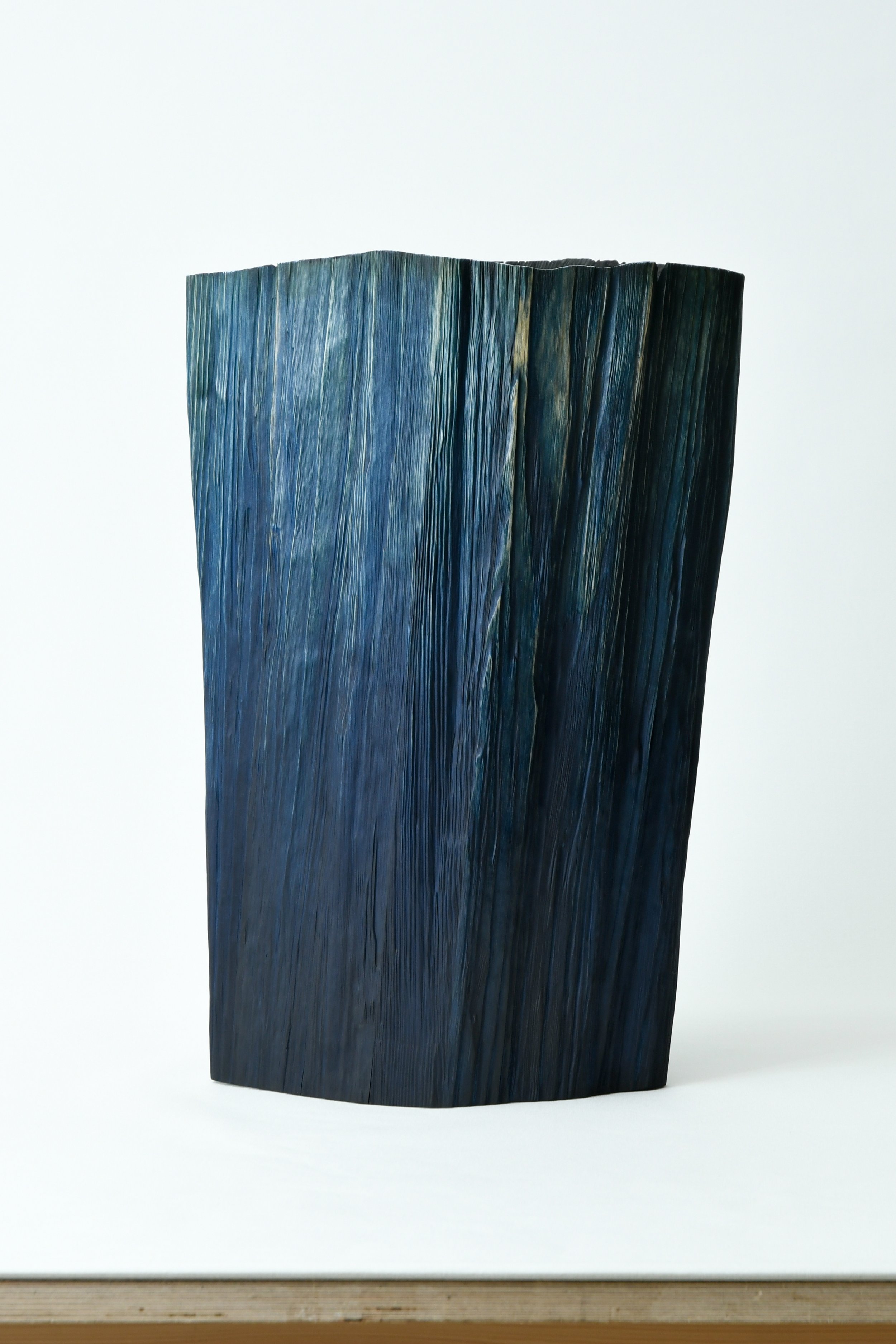
Didi Ng Wing Yin (HK/FI) is a Helsinki-based wood artist from Hong Kong whose practice bridges sculpture, furniture, and craft. Working by hand, he creates sculptural furniture guided by his concept of Naturalness, allowing the wood’s inherent character to shape each piece through intuitive carving and material exploration.
Didi holds an MA in Interior Architecture (Furniture Design) from Aalto University. His work has received international recognition, including being a finalist for the LOEWE FOUNDATION Craft Prize 2025, winning the Scandinavian Design Award’s Rising Star of the Year 2024, and receiving Dezeen’s Emerging Designer of the Year Award 2024. A two-time recipient of Finnish arts funding, his work is held in the permanent collection of the Röhsska Museum, Gothenburg. He has presented solo exhibitions across Brussels and Helsinki and exhibited widely across Europe.
How did you break into the furniture industry or design field?
DiDi NG WING YIN
It was a long story when I was studying for my bachelor's degree in product and industrial design at the Hong Kong Polytechnic University. After attending my first furniture course, I decided to focus on furniture design in the future. However, in my opinion, Hong Kong is not a suitable place for the furniture design field due to a lack of factories, space, and demand. After gaining a few years of work experience in interior design and product design, I decided to study in Finland and started my studio to pursue a new direction in creating sculptural furniture.
Describe your practice in more detail. What inspired you to create your current concept or studio branding?
DiDi NG WING YIN
It was a long journey to build my practice in creation. My design practice started to change when I made my first sculpture while studying at Aalto University. At that time, my major was furniture design, and the focus was primarily on practical applications and visual aesthetics. However, I found myself feeling dissatisfied with this approach. After creating my first sculpture, I discovered a deeper enjoyment in self-expression, philosophical thinking, and a more introspective creative process, rather than producing items for mass consumption. This realisation sparked an exploration into the differences between art and design, leading me to consider any possible connections between the two. I began to let go of labelling myself as a designer or as an artist; instead, I focused on the study of materiality, particularly in wood. I aimed to bring up its intrinsic value by making to enhance the natural properties of the wood. After years of practice, my current concept has started taking shape.
Who would be your icons and muses? (This is a great way to understand his influences.)
DiDi NG WING YIN
At the beginning of my design journey, I was inspired by Shiro Kuramata. Now, my influences have shifted to David Nash and Andrea Branzi. There are more but they are always my favourites.
Tell me more about designers or artists in general you would love to collaborate with. (This keeps the collaboration question broad and engaging.)
DiDi NG WING YIN
I would love to have a conversation with David Nash, as it would be a dream come true. In general, I am open to collaborating with any artists and designers, as I see it as a valuable opportunity to learn from different perspectives.
When designing a furniture piece, what is the most important factor for you?
DiDi NG WING YIN
When it comes to furniture, it should fulfil its intended function based on its type. For example, a chair should be capable of sitting. Not about its quality, but just the basic service. Additionally, there should be a clear and compelling reason for creating the furniture. While the reason can be open to interpretation, it must be strong enough to convey its purpose.
If you could give one piece of advice to a young designer who is torn between the speed of digital production and the slow mastery of traditional craft, what would it be?
DiDi NG WING YIN
Just ignore that; speed is not the goal, and good things take time. That's not what you're competing for. Instead of trying to compare, focus on understanding the core value you are mastering. Build that up, and those challenges will no longer be an issue for you.
Given your Hong Kong roots and education in Finland, how does the cultural difference in perceiving "craft" versus "art" influence the level of utility or conceptual abstraction you allow in a piece that bridges sculpture and furniture?
DiDi NG WING YIN
The most common situation involves splitting the wood. Splitting is not just about separating large surfaces; chiselling the wood against the grain can also cause chipping, which has the same effect as splitting. When the wood is split, the surface reveals its fibres and growth patterns. I enjoy assembling these split surfaces to create a larger natural surface, and then I carve to make the assembled surface look seamless. I don't consider these characteristics of wood to be constraints, rather I try to incorporate them into my work. I didn't plan much from the beginning, but it was just a rough idea of the typology of work. I split the wood first and think through following my actions. Nothing is being abandoned or altered because it is part of the process.
How would you translate your deeply intuitive and singular carving process into a design that retains the essence of Naturalness and your signature touch, while being feasible for the 'Eclectic Encounter' series?
DiDi NG WING YIN
The cultures of the two places are extremely different, particularly in terms of consumerism and craftsmanship. In Finland, wood is the primary resource, which influences the local mentality around its use. Wood is an integral part of everyday life, from firewood to furniture and architecture. Moving from a big city to a country so closely tied to nature has heightened my appreciation for natural materials. I believe this contrast enhances the overall experience. In Hong Kong, the culture of making is not strong. We purchase rather than repairing or making. Being distanced from consumerism has taught me to understand that not everything comes easily. Every object has a background, history, and reason for its existence. What I wish to do is to embrace the materiality of wood, prioritise it over practicality. I see this method as a way for people to understand a known material's other side and broaden their perception of the world.
As a two-time recipient of Finnish arts funding, how does the Scandinavian emphasis on material truth and functionality intersect with or challenge your exploration of spirituality and narrative often associated with Hong Kong-based design sensibilities?
DiDi NG WING YIN
I am not sure if this is related to my background in Hong Kong. But I resonate a lot with the Scandinavian way of utilising and embracing wood. I tend to find new ways of expressing the materiality of wood through carving, which is often appreciated in that context. One of the challenges I face is that the furniture I create sometimes lacks perfection in functionality; its impracticality may clash with the design ethos in Finland. However, I believe there is always a balance to be found in concepts. If I want to focus on the materiality of my work, I am willing to accept that some pieces may be less practical. Maybe this is why my work looks a bit different.
Your work has received major international recognition (LOEWE, Dezeen, Scandinavian Design Award). How do you maintain the intimacy and intuitive hand-craftsmanship central to your practice while navigating the pressures and demands of the global design market?
DiDi NG WING YIN
I always stick to my work philosophy, which I genuinely enjoy and love doing in life. The recognition helped a lot in gaining international audiences, which has strengthened my ideology in creating. I tried to find the balance in producing work more efficiently while continuing to explore my practice more deeply. Instead of seeing it as pressure, I view it as motivation to push forward and create even more meaningful and profound pieces.
CONTACT US FOR INQUIRY