Flux and Flow. Starring at Nina Saunders and Faig Ahmed.
Words by Aliecia Cindy
Despite the different mediums (carpets and furniture), these two artists use the deconstruction of what has generally been a functional object in an attempt to challenge our perception of art, heritage, and domesticity. Azerbaijani carpets are of particular significance to the culture, a thing that is handed down from generation to generation with its finest ways and design, every one of color and designs having its eccentric meaning to it. In a society in which so much of the significant experience of life, from birth to death, takes place on carpets, they are a powerful symbol of continuity and identity. The ready access to this richness of heritage through the form adopted by Ahmed simultaneously makes his work highly personal and culturally specific even as he unpacks it. The carpet for Ahmed is a metaphor for the preservation of culture against the forces of change. He employs master weavers who still employ the old, time-consuming methods of their craft, preserving the traditional way. He then digitally manipulates the designs, introducing "glitches" or "melts" that render the final piece a contemporary sculpture. This tension highlights the conflict between the fixed nature of old tradition and the radical, but often disorderly, power of new technology and globalization. It's a dialogue between history and the present, proving that an old artifact can be repurposed to make comments on global, modern issues.
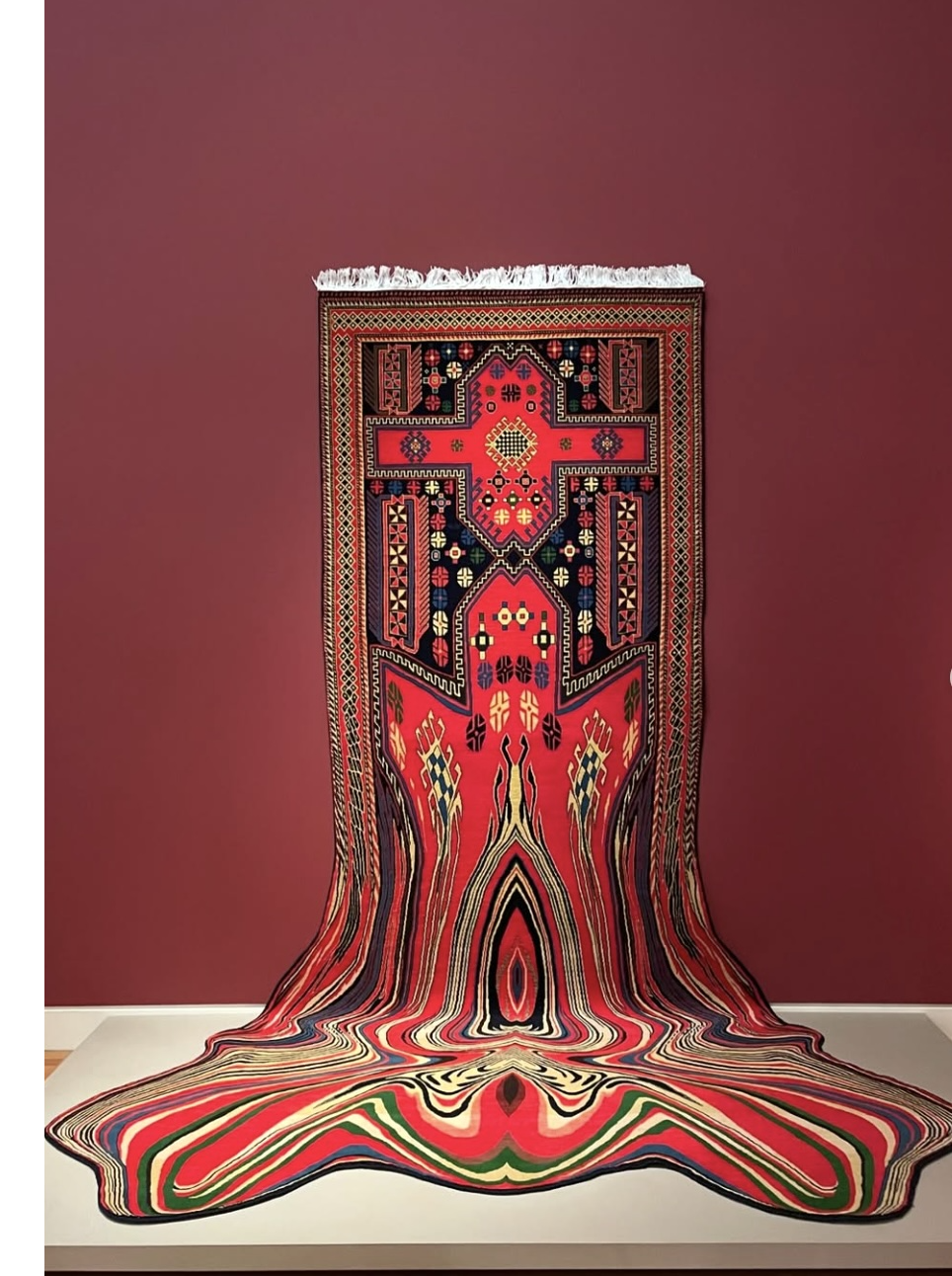
Picture by Yayha Bakuvi | Work by Faig Ahmed Studio
He believes the intricate patterns on carpets are a form of universal, "coded language." By deconstructing and rearranging them, he tries to decipher the secret, oftentimes metaphysical, message behind these age-old symbols. Ahmed's work forces us to think about cultural heritage as a living language that is capable of being re-interpreted, re-coded, and re-imagined over and over again.
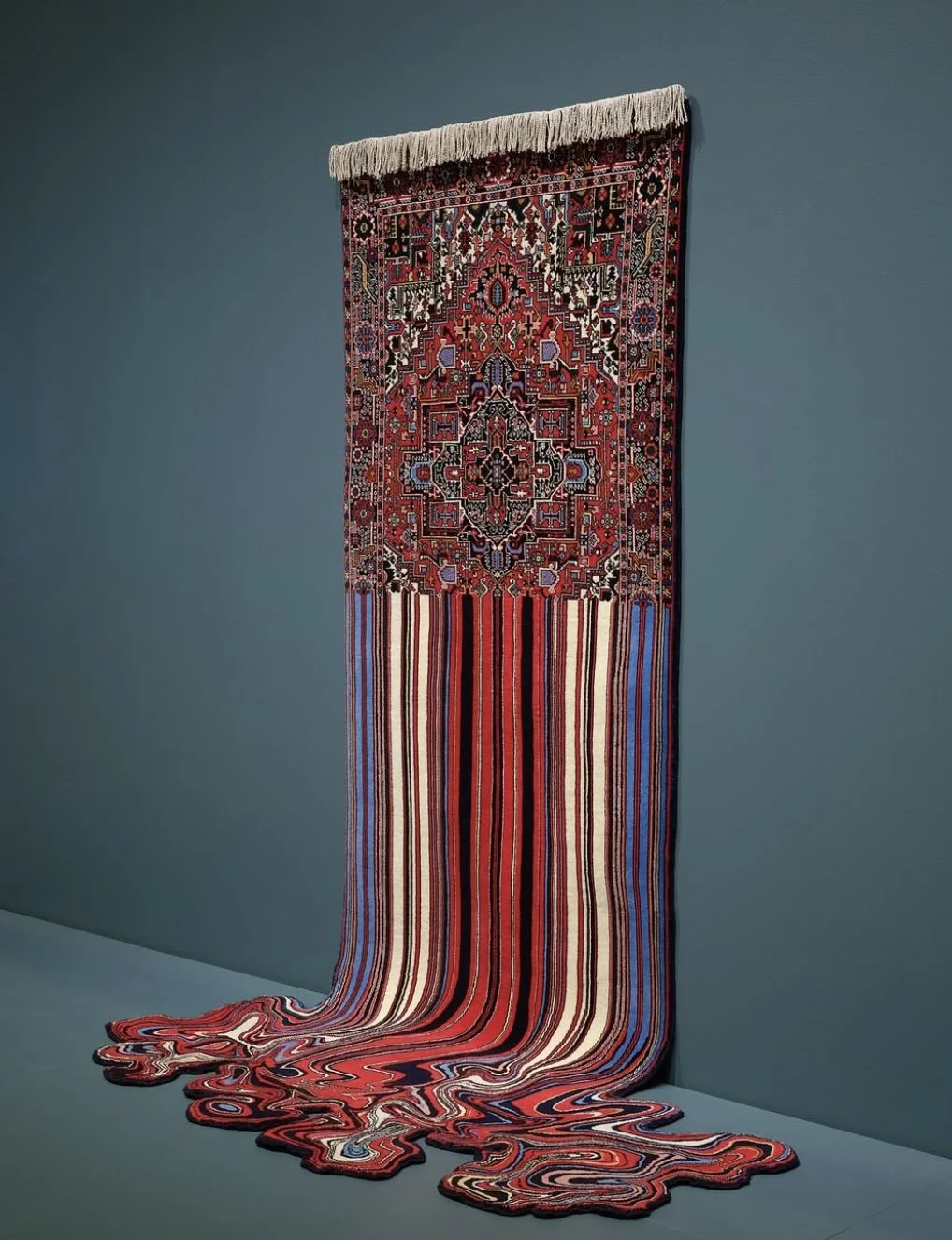
Picture by Sam Harnett | Work by Faig Ahmed Studio
Meanwhile, Saunders medium is furniture and more precisely, discarded or second-hand armchairs and sofas, apart from that she did a collaboration with Steinway & Sons incorporating her melting effect of the piano. She is a self-taught upholsterer, and her art installation involves modifying these everyday household objects into sculptures.
She repurposes these everyday objects, which she often seeks out at auctions and thrift stores, and turns them inside out in terms of their purpose and form. Saunders re-upholsters them, but instead of maintaining their rigid form, she stretches the fabric and stuffing to make them have a "melting" or "distended" look. The furniture appears to be sagging, dripping, or accumulating on the ground, falling out of use as a chair. In so doing, she defies our conception of everyday objects. The works are both humorous and disturbing, in that the viewer identifies with the familiar form of chair but is confronted with its strange, useless state. The works initiate discussions regarding themes of domesticity, memory, and the relationship of our bodies to the objects that fill our spaces.
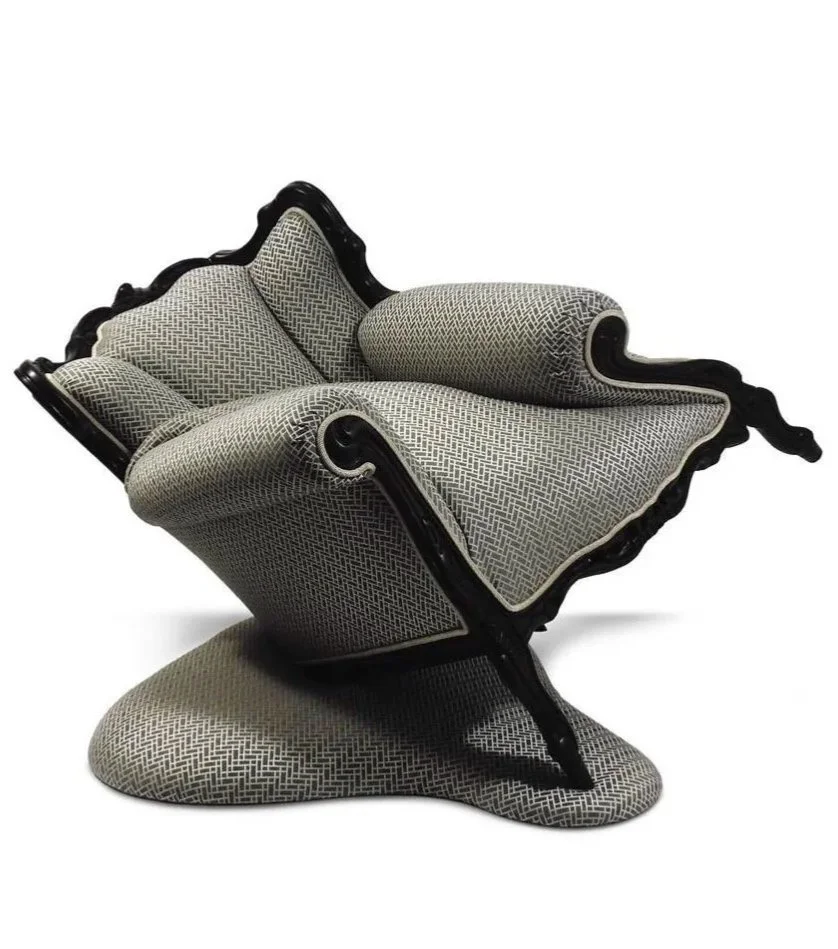
Saunders Studio
Her signature "melting" sofas and armchairs are also a powerful metaphor for the instability of domestic life and the psychic weight of our possessions. In melting the armchairs and sofas into the floor, she melts their function as indicators of comfort and solidity. This visual distortion suggests that the boundaries of our inner lives are not as solid as they seem to be, and can substitute for emotional or domestic collapse. Saunders' work carefully balances a surrealist, comedic tone with a darker, more reflective one. The absurdity of a velvet sofa bleeding onto the floor is both funny and unsettling. This tension allows her to approach challenging material, such as social commentary and consumerism, in an accessible and intellectual way. By reclaiming old, discarded furniture, she subtly critiques consumer culture and the buy-and-toss cycle, bringing new life to things that society has rendered useless.

Saunders studio "Angel in freefall" in the collection of Horsens Kunstmuseum
Faig Ahmed and Nina Saunders both utilize the "melting" trope to invert and disassemble familiar objects. The common visual vocabulary becomes a metaphor for transformation, freeing the tension between past and present. For Ahmed, the melting carpet is the manner in which ancient geometric conventions are not static but are in continuous flux under the duress of the digital age. For Saunders, a melting armchair is the emotional and psychological vulnerability beneath the façade of interiority. Their work discomfits and intrigues onlookers by taking something common, a carpet or a chair and rendering it dysfunctional, forcing us to look beyond its intended purpose.
